Flat Roof Costs by Material (2026)
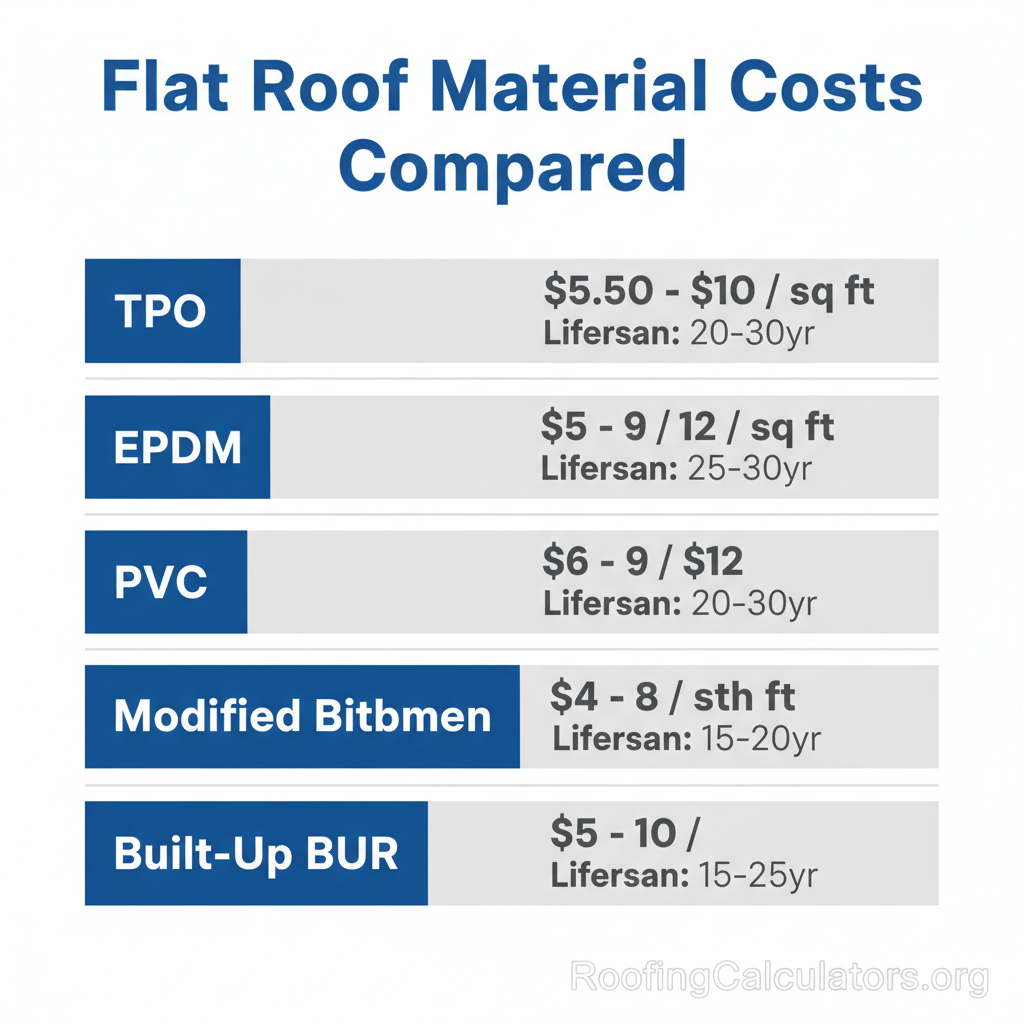
Flat roofing (also called low-slope roofing) uses membrane systems rather than overlapping shingles or tiles. The five main flat roof membrane types each offer different cost and performance characteristics:
| Material | Cost/Sq Ft | Lifespan | Best For |
|---|---|---|---|
| EPDM (Rubber) | $4.00–$8.00 | 20–30 years | Budget residential, large commercial |
| TPO | $5.50–$10.00 | 20–30 years | New construction, energy efficiency |
| PVC | $6.50–$13.00 | 25–35 years | Chemical exposure, restaurants, premium |
| Modified Bitumen | $4.50–$8.50 | 15–25 years | Residential, walkable roofs |
| Built-Up (BUR) | $5.00–$9.00 | 20–30 years | Commercial, proven track record |
EPDM vs. TPO vs. PVC: Choosing the Right Membrane
EPDM (Ethylene Propylene Diene Monomer) is a synthetic rubber membrane that has been the flat roofing workhorse for over 50 years. It's the most affordable single-ply membrane, available in black or white, and performs well in extreme temperatures. The primary downside is that seams are glued (adhesive or tape) rather than heat-welded, making them the most common failure point.
TPO (Thermoplastic Polyolefin) has become the most popular flat roof membrane for new construction. Its heat-welded seams are stronger than the membrane itself, and the white reflective surface reduces cooling costs by up to 15% according to DOE studies. TPO offers the best balance of cost, performance, and energy efficiency for most applications.
PVC (Polyvinyl Chloride) is the premium single-ply option. Like TPO, it features heat-welded seams, but PVC adds superior chemical resistance — making it the best choice for restaurants (grease exhaust), manufacturing facilities, and buildings near chemical processing. PVC also has the longest proven track record of the single-ply membranes, with some installations exceeding 30 years.
Residential vs. Commercial Flat Roofs
Commercial flat roofs typically cost 15–25% less per square foot than residential due to economies of scale, simpler access, and fewer penetrations. A 10,000 sq ft commercial roof might cost $5.50–$8.00/sq ft, while a 1,500 sq ft residential flat roof might run $6.50–$11.00/sq ft for the same membrane type.
Commercial projects also benefit from more competitive bidding (larger contract values attract more contractors) and standardized installation procedures. However, commercial roofs often require additional features like tapered insulation systems, internal drainage, and walk pads that add cost.
Drainage and Ponding Water
Proper drainage is the single most important factor in flat roof performance. The industry standard (per NRCA and IBC) requires a minimum slope of 1/4 inch per foot toward drains or scuppers. Standing water that persists more than 48 hours after rain (ponding) accelerates membrane degradation, adds structural load, and voids most manufacturer warranties.
Common drainage solutions include interior drains with tapered insulation, scuppers through parapet walls, and edge gutters. For existing flat roofs with ponding issues, a tapered insulation retrofit ($2.00–$4.00/sq ft) can resolve drainage problems during the next re-roof.
Energy Efficiency and Cool Roofing
White or light-colored flat roof membranes qualify as "cool roofs" under DOE and ENERGY STAR standards, reflecting up to 80% of solar radiation compared to 5–15% for dark membranes. For buildings with significant cooling loads, a cool flat roof can reduce annual cooling energy costs by 10–15% and extend membrane lifespan by reducing thermal cycling.
Several states and municipalities require cool roof membranes for new commercial construction. Check your local energy code (typically IECC or California Title 24) for current requirements.
Frequently Asked Questions
How much does a flat roof cost?
What is the best flat roof material?
How long does a flat roof last?
Do flat roofs leak more than pitched roofs?
Can I install a flat roof on my house?
Mike Brennan
Roofing Cost Analyst
Former licensed roofing contractor with 18 years of experience. HAAG Certified Inspector & NRCA ProCertification.