How Much Does a Roof Replacement Cost in 2026?
The national average cost to replace a roof in 2026 is approximately $9,500, according to Angi and corroborated by NAHB construction cost data. Most homeowners pay between $5,800 and $13,500 for a full roof replacement, though high-end materials like slate or copper can push costs well above $30,000.
These numbers reflect all-in costs: materials, labor, tear-off/removal of the old roof, disposal fees, and building permits. The Bureau of Labor Statistics reports the median hourly wage for roofers (occupation code 47-2181) at $24.51 as of May 2024, which typically translates to contractor charges of $75–$78 per hour to homeowners after factoring in workers' compensation insurance, general liability, overhead, and profit margin.
Roof Replacement Cost by Material
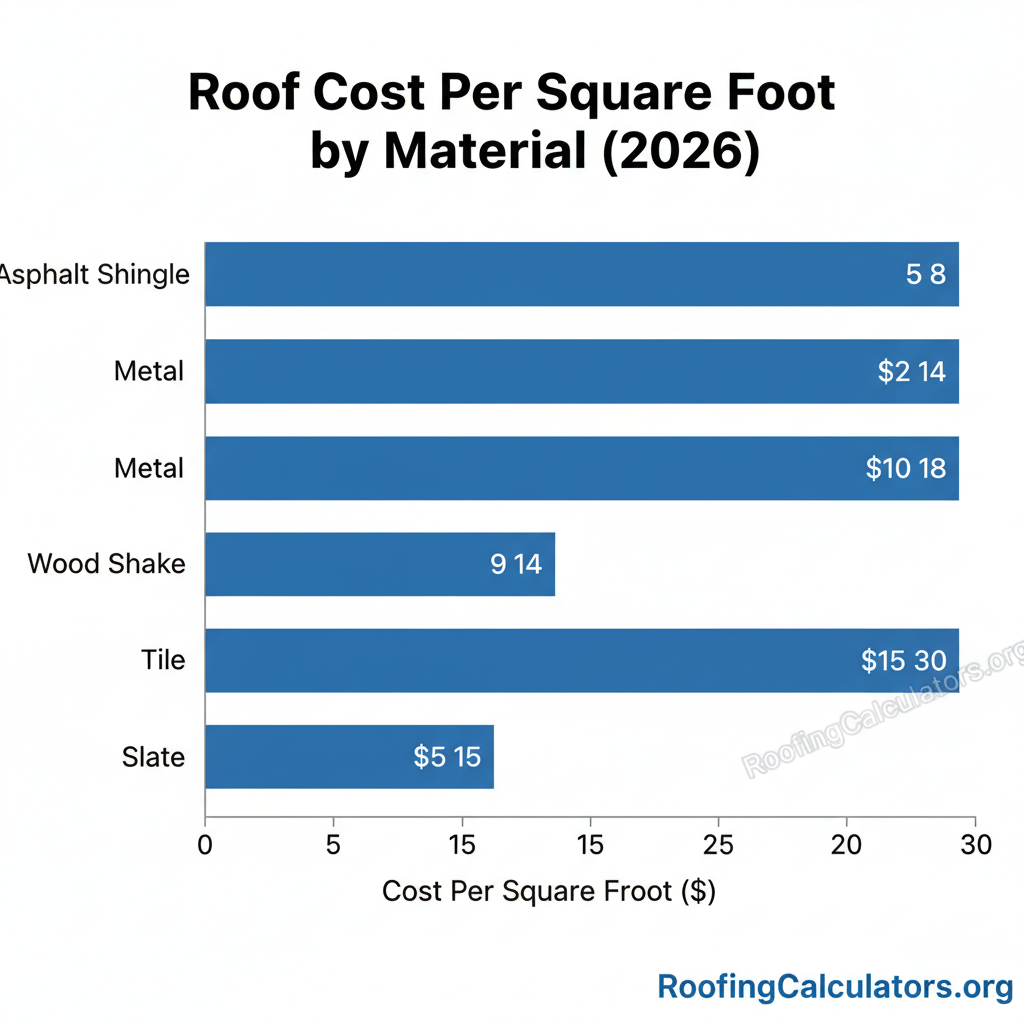
Your choice of roofing material is the single biggest factor in your total project cost. Here is how the major roofing materials compare on a per-square-foot installed basis, along with total costs for a typical 2,000 sq ft roof:
| Material | Cost/Sq Ft | 2,000 Sq Ft Total | Lifespan |
|---|---|---|---|
| 3-Tab Asphalt | $3.40–$6.40 | $6,800–$12,800 | 15–20 years |
| Architectural Shingle | $4.00–$7.50 | $8,000–$15,000 | 25–30 years |
| Premium Shingle | $5.40–$10.10 | $10,800–$20,200 | 30–50 years |
| Standing Seam Metal | $9.20–$16.10 | $18,400–$32,200 | 40–70 years |
| Clay Tile | $11.50–$20.70 | $23,000–$41,400 | 50–100 years |
| Natural Slate | $15.00–$30.00 | $30,000–$60,000 | 75–100+ years |
| Wood Shake | $6.00–$14.00 | $12,000–$28,000 | 20–40 years |
| TPO (Flat) | $4.70–$10.40 | $9,400–$20,800 | 20–30 years |
Roof Replacement Cost by Size
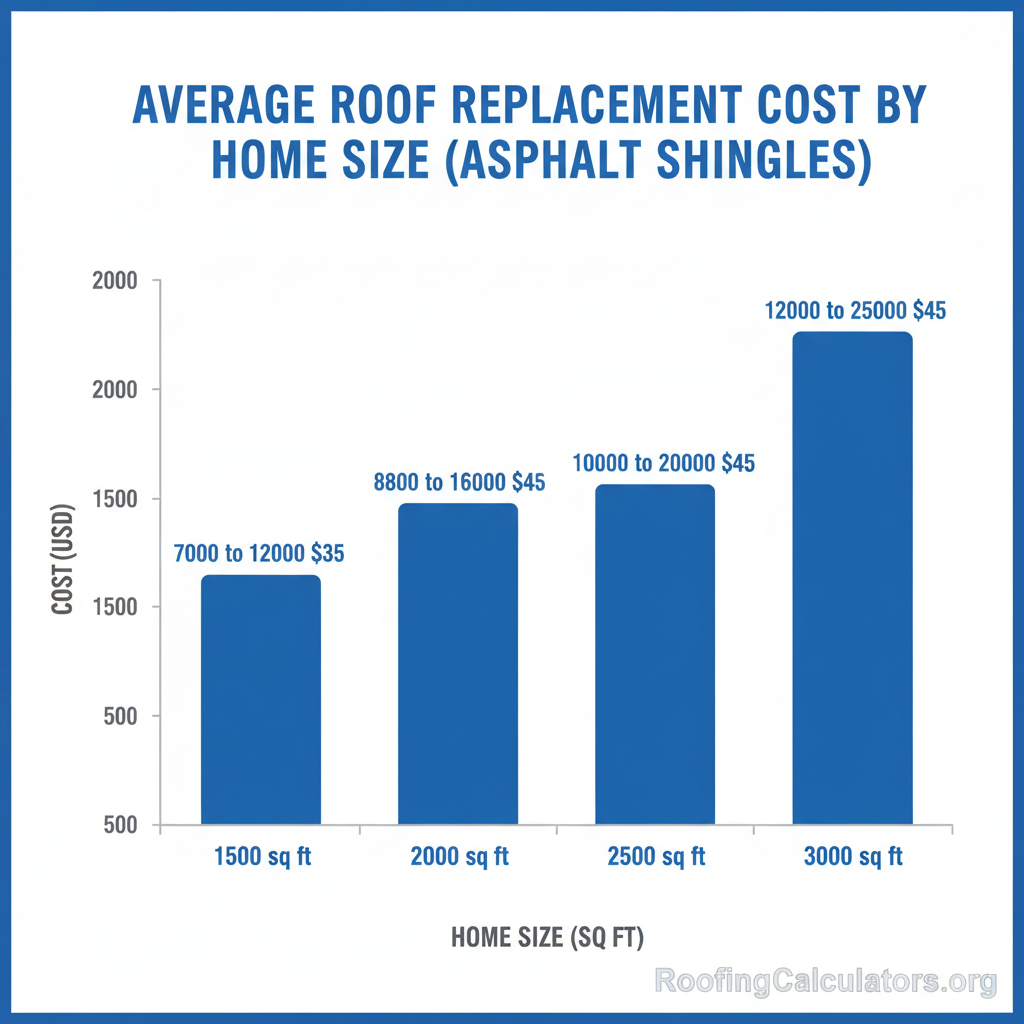
Roof size directly affects total project cost. The national average roof size is approximately 1,700 square feet, according to Census housing data. Here is how costs scale with architectural shingles (the most popular choice) at national average pricing:
| Roof Size | Approximate Home Size | Cost Range |
|---|---|---|
| 1,200 sq ft | 1,000–1,200 sq ft home | $4,800–$9,000 |
| 1,500 sq ft | 1,200–1,500 sq ft home | $6,000–$11,250 |
| 1,700 sq ft | 1,400–1,700 sq ft home | $6,800–$12,750 |
| 2,000 sq ft | 1,700–2,000 sq ft home | $8,000–$15,000 |
| 2,500 sq ft | 2,000–2,500 sq ft home | $10,000–$18,750 |
| 3,000 sq ft | 2,500–3,000 sq ft home | $12,000–$22,500 |
Roof Replacement Cost by State
Labor rates and material costs vary significantly by state. According to BLS OEWS data, the highest-paying states for roofers include Minnesota ($30.20/hr), Massachusetts ($29.50/hr), California ($30.50/hr), and New Jersey ($29.00/hr). The lowest-paying states include Wyoming ($18.80/hr), Mississippi ($18.50/hr), and West Virginia ($19.00/hr).
When adjusted for cost-of-living multipliers, contractor charges, and regional material costs, homeowners in high-cost states can expect to pay 30–50% more than those in low-cost states for an identical roofing project.
| Category | States | Cost vs. National Avg |
|---|---|---|
| Highest Cost | HI, CA, MA, NY, NJ, CT | +25% to +50% |
| Above Average | WA, CO, MN, IL, OR, MD | +5% to +20% |
| Average | PA, VA, MI, FL, TX, NC | ±5% |
| Below Average | GA, IN, OH, MO, TN, KY | -5% to -15% |
| Lowest Cost | MS, WV, WY, AR, AL, NM | -15% to -25% |
Labor vs. Materials: Understanding the Cost Split
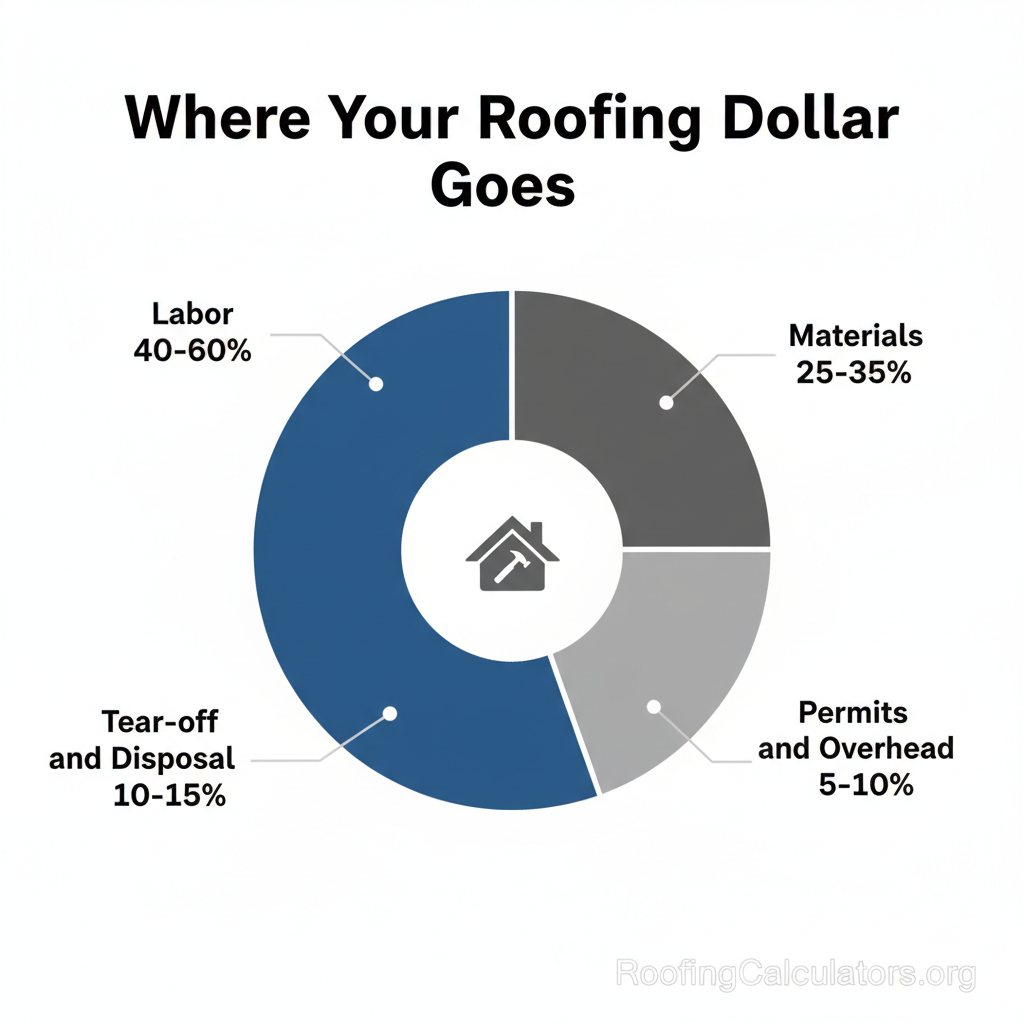
Industry consensus and NAHB data indicate that labor typically accounts for 40–60% of total roof replacement cost, with the remaining 40–60% going to materials, tear-off, disposal, and permits. The labor share tends to be higher in high-cost-of-living states (California, New York, Massachusetts) and lower in states like Mississippi and Arkansas.
The BLS reports that the median roofer earns $24.51/hr ($50,970/yr) as an employee, while the mean wage is slightly higher at $26.85/hr ($55,840/yr). Contractors charge homeowners $75–$78/hr — a 2–3x markup that covers workers' compensation insurance (which alone can be 15–30% of payroll for roofing), general liability insurance, equipment, vehicle costs, and profit margin. This markup is consistent with industry standards reported by the Associated General Contractors of America (AGC).
Tear-Off vs. Overlay: Cost Comparison
When replacing a roof, homeowners face a key decision: tear off the existing roof or overlay (install new shingles over the old ones).
Tear-off costs $1.00–$5.00 per square foot, adding $1,700–$8,500 to a typical 1,700 sq ft project. Tear-off is required when: there are already 2 layers of shingles, the deck needs inspection/repair, you are switching material types, or building codes require it. Most building codes limit roofs to 2 layers maximum.
Overlay saves the tear-off and disposal cost but has significant downsides: it adds weight to the structure, prevents deck inspection, may void manufacturer warranties, can trap moisture, and creates an uneven surface. Most roofing professionals and the NRCA (National Roofing Contractors Association) recommend tear-off for a proper installation.
2026 Material Price Trends: Tariffs and PPI Data
Several market forces are affecting roofing material costs in 2026:
Steel and aluminum tariffs: Section 232 tariffs remain at 50% as of mid-2025, with no scheduled reduction. According to BLS Producer Price Index data, aluminum mill shapes increased 33% year-over-year as of January 2026, and steel mill products rose 20.7% YoY. This directly impacts standing seam metal, corrugated metal, and aluminum roofing.
Asphalt shingles: BLS PPI data for asphalt paving and roofing materials shows prices near record highs, though growth has stabilized compared to the rapid increases of 2021–2023. The NAHB reports overall residential construction input prices have maintained >3% year-over-year growth since mid-2025.
What this means for homeowners: Metal roofing is significantly more expensive than it was 2–3 years ago due to tariffs. Asphalt remains the best value for budget-conscious homeowners, while those choosing metal should factor in the long-term cost-of-ownership advantage (40–70 year lifespan vs. 25–30 for architectural shingles).
Signs You Need a Roof Replacement vs. Repair
Not every roof issue requires full replacement. Consider these factors when deciding between repair and replacement:
Repair is typically appropriate when: damage is localized to a small area, the roof is less than 50% through its expected lifespan, repair costs are below 30% of replacement cost, and only minor issues like a few missing shingles or a small leak are present.
Replacement is typically necessary when: the roof has exceeded 80% of its expected lifespan, multiple areas show damage or wear, there is visible sagging or structural issues, granule loss is widespread (indicating end-of-life for shingles), recurring leaks persist despite repairs, or storm damage is extensive.
How to Save Money on a Roof Replacement
Timing: Schedule your replacement during the off-season (late fall through early spring in most regions). Contractors are less busy and may offer competitive pricing. Avoid scheduling immediately after major storms when demand surges.
Material choice: Architectural shingles offer the best balance of cost, durability, and curb appeal for most homeowners. 3-tab shingles are cheaper upfront but have a shorter lifespan, often making them more expensive per year of service.
Get multiple quotes: Always obtain at least 3 written quotes from licensed, insured contractors. Verify their license status with your state licensing board. Ask about manufacturer certifications (GAF Master Elite, Owens Corning Preferred) which may offer extended warranties.
Consider insurance: If your roof was damaged by a covered peril (wind, hail, fire), file a claim. The difference between ACV (Actual Cash Value) and RCV (Replacement Cost Value) policies can be thousands of dollars.
Insurance: ACV vs. RCV for Roof Claims
When filing a roof insurance claim, your policy type matters enormously. Replacement Cost Value (RCV) policies pay the full cost to replace your roof with equivalent materials at current prices. Actual Cash Value (ACV) policies deduct depreciation — meaning a 15-year-old architectural shingle roof (50% through its lifespan) would receive roughly half the replacement cost.
For a $12,000 replacement: an RCV policy might pay $12,000 minus your deductible, while an ACV policy might pay only $6,000 minus your deductible. If you have an ACV policy, consider upgrading before your roof reaches the end of its lifespan.
State Grant Programs for Roof Replacement
Several states offer grant or incentive programs for roof upgrades, particularly those that improve wind and storm resistance to IBHS FORTIFIED standards:
Alabama — Strengthen Alabama Homes offers up to $10,000 for FORTIFIED Roof designation. Louisiana — The state offers up to $10,000 through the Louisiana Fortify Homes Program. South Carolina — SC Safe Home provides grants up to $5,000 for roof upgrades. North Carolina — The Strengthen NC Homes program provides grants for FORTIFIED construction. Oklahoma — Offers insurance premium discounts for FORTIFIED-rated roofs.
Additionally, under the Inflation Reduction Act (IRA), the Energy Efficient Home Improvement Credit provides up to $150 for qualifying ENERGY STAR-rated roofing products (reflective metal roofing, cool roof coatings). The Residential Clean Energy Credit covers up to 30% of solar roofing system costs with no dollar cap.
Frequently Asked Questions
How much does a roof replacement cost in 2026?
What is the cheapest roofing material?
How long does a roof replacement take?
Does homeowners insurance cover roof replacement?
Should I repair or replace my roof?
What are the 2026 tariff impacts on roofing costs?
Are there tax credits for a new roof?
How much does a roof cost per square foot?
What state has the highest roofing costs?
What is a roofing square?
Mike Brennan
Roofing Cost Analyst
Mike Brennan is a former licensed roofing contractor with 18 years of experience in residential and commercial roofing across the Southeast and Midwest. After running his own crew for a decade, he transitioned to construction cost research. His calculator data draws from the Bureau of Labor Statistics, NAHB cost reports, and active contractor pricing surveys across all 50 states. Mike holds HAAG Certified Inspector credentials and NRCA ProCertification.